

Marie Antoinette, Trendsetter - A Visit to the Fashion Exhibition
In recent years, since two of my children have been living in Europe (Amsterdam and London), I get to visit them at least once a year. When planning my visit, I always include a trip to museums. In London, there are two museums I particularly love - the Museum of Fashion and Textiles and the Victoria and Albert Museum. These museums, especially the latter, have a central fashion/design exhibition every year. The exhibition (1) "Marie Antoinette Style" at the Victoria and Albert Museum was much more than just a historical fashion exhibition; it analyzed how fashion influence is created and how one figure can continue to shape taste for more than 250 years. But perhaps what felt most contemporary was how relevant it still is. Even today, behind every object, there is a system of creative hands (2), decisions, and stories. In a world of fast production, the choice to work differently, more slowly, through material and touch, feels like a continuation of that line: not just to create something beautiful, but to take part in shaping culture, even on a smaller, more personal scale.

For me, there is something fascinating about entering a fashion exhibition in a museum; I'm not just looking at clothes and accessories, I'm searching for the hands that made them. For years, clothing has been presented as a testament to the era, not as an art form in itself. Only when fashion truly entered museums and began to gain a place of honor did people start to see what was behind it: the seams, the choices made in a world of mass and rapid production versus handwork, which feels almost like a quiet statement, a presence, and fashion as a mirror of the time.

With this thought, I enter the exhibition not only to see what was worn but how it was created.
When I arrived at the exhibition on Marie Antoinette in London in October 2025, I felt like I was going back in time. The exhibition, dedicated to the history of fashion during such an iconic figure, made me view her style secrets with fresh eyes. Most of us know Marie Antoinette as the last queen of France before the revolution, thanks to the iconic quote – "Let them eat cake". But there was much more to her. Marie Antoinette, Archduchess of Austria, was born in 1755 and married the heir to the French throne at the age of 14. In 1774, after his father's death, he became Louis XVI, the last king before the revolution. She was executed in 1793 at when she was only 38 years old.
The exhibition clearly shows that:
- Marie Antoinette was not a passive 'fashion icon'; she acted as a creative director of national style. How did this manifest? Rose Bertinת fashion designer and stylist of the queen, worked with creators and hairstylists, created new trends (poufs - gigantic hairstyles), changed silhouettes, materials, and even how a queen "was supposed" to look, meaning she did not just wear fashion, she dictated it from the top down.
One of the strongest points of the exhibition is the understanding that fashion is composed of a system of craftsmen (and that's critical). Marie Antoinette was dependent on, and also supported, an entire network of craftsmen: silk weavers in Lyon, tailors, embroiderers, jewelers, perfume manufacturers, and furniture makers. In fact, he did something very modern; she advanced industries through her taste. In other words, she was both a customer and a muse, as well as a market force.

(3) Trends as a Message: Power, Identity, and Politics The exhibition emphasizes a very delicate point: the trends she led were not only aesthetic; they were politically charged. Examples: the shift to simple muslin dresses (see the above picture that was painted by Elisabeth Loise Viagee) was an attempt to appear 'natural' because lavish court designs were seen as a sign of wealth and disconnection to the people. The intentions led to the opposite response than expected; the public did not see it as a 'simple style' but as a symbol of social disconnection, because even this 'simple' style was made from expensive fabrics and by seamstresses working for the royal household, certainly, not so natural and people-oriented. The fashion she promoted became part of the criticism against her, because what she considered 'simplicity' was still luxury and splendor to the common people. Meaning, it could also be dangerous; her fashion became part of the critique against her.
(4) Trend leadership The last part of the exhibition shows something else important: the "Marie Antoinette" brand continues to operate today, and designers like McQueen, Dior, and Westwood draw inspiration from her; the aesthetics (pastels, volumes, embellishments) have become a language. It is no longer just a person; it involves a whole cultural code. Furthermore, several films about her have been made in which top designers created costumes for actresses. Marie Antoinette was one of the first to understand that fashion is not just an object; it is a system of influence, and this system includes: creators, materials, stories, audiences, and images. So back then, there was a queen shaping taste through craftsmen and today, there are independent designers choosing not to disappear into the industry (like me, for instance). The difference is that back then, power was central; today, it can be personal and intimate.
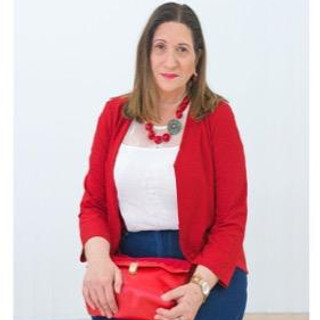
My choice to go to this exhibition was not coincidental; my works with leather, such as the small retro clutch I designed, were created thanks to inspirations drawn from previous visits to fashion exhibitions. In this exhibition, I saw many influences that reminded me of my little world, also in other works such as the tote bag and the peach-colored clutch. In the exhibition space, every corner was carefully designed and proudly displayed. The original outfits, made from precious fabrics, honored the work of the designers of the era. Visitors strolled through impressive spaces, and each one found a unique moment with history, as I let the magnificent collections take me to a delightful and mysterious place. From the moment I entered the museum, I was focused on the details of the pieces. Every bag, shoe, garment, or piece of jewelry made an impression that was irreplaceable. It was like a dream come true, and every item was a treat for my eyes. More than once, I imagined myself living in those days when haute couture demanded innovation, with creativity that knows no bounds.
(6-8, Instagram posts I wrote following the exhibition)

I love to combine fabrics with leather, mainly lace, through this combination, I emphasize the colors and relate to history (upper picture). Unlucky Marie Antoinette was not just a brightly illuminated figure, but also human and brave, who integrated her life with the patterns and dynamics of a society that was in a period of transition; the time she lived in was not suitable for her vision. This exhibition and her book, which I purchased and consult quite often, provide a glimpse into a culture that was and is no longer, yet the "Marie Antoinette" brand is still alive and kicking!
The pictures from the exhibition were taken by me while visiting. The pictures of the bags were also taken by me and edited using AI
References
(9) The Exhibition Book - Marie Antoianette Style Edited by Sarah Grant V&A Publishing


Comments